ZUGFeRD 2.x explained: structure, profiles and practice
How much valuable working time does your team spend manually transferring invoice data from a PDF into your accounting software? How often do small typing errors lead to annoying payment delays and time-consuming correction loops? For managing directors and finance managers in SMEs, these are everyday challenges that cost not only time and nerves, but also hard cash.
Imagine an invoice that can do both: it is perfectly readable on screen for your business partner and at the same time feeds your accounting system fully automatically with all relevant data – error-free and within seconds. What sounds like a vision of the future has long been reality and has a name: ZUGFeRD, the German hybrid e-invoice standard published by FeRD (Forum elektronische Rechnung Deutschland).
At the latest with the obligation to be able to receive e-invoices in force since 1 January 2025 and the phased obligation to issue them from 1 January 2027 (previous-year turnover above €800,000) and 1 January 2028, this topic becomes vital for every business. ZUGFeRD is not just a technical gimmick, but a strategic game-changer for your finance processes, your liquidity and your competitiveness.
In this guide you will learn everything you need to know:
- What ZUGFeRD really is (explained simply)
- The key differences from its competitor XRechnung
- How the ZUGFeRD format works in practice
- The specific advantages for your business
- What the new legal situation since 2025 means for you
- How to plan the switch – and how FaeBill supports you along the way.
Ready to revolutionise your invoice processing? Then let's get started.
What is ZUGFeRD? The best of two worlds
ZUGFeRD is an abbreviation and stands for “Zentraler User Guide des Forums elektronische Rechnung Deutschland” (Central User Guide of the Forum for Electronic Invoicing Germany). But behind the cumbersome name lies a brilliantly simple concept.
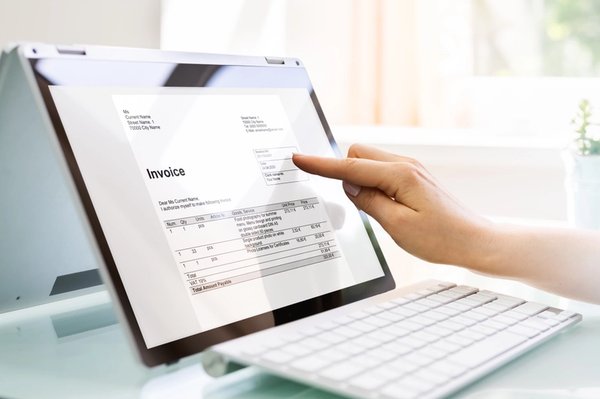
Think of ZUGFeRD as a hybrid invoice. It consists of two inseparable components in a single file:
- The visual component (for humans): What you see is a completely normal PDF document (specifically in PDF/A-3 format). You can read, print or archive this invoice on screen as usual. It contains all invoice data in a human-readable layout.
- The data layer (for the machine): Invisibly embedded in the PDF is an XML file. This file contains the same invoice data (invoice number, date, amounts, line items etc.) in a standardised, structured form. Accounting programs and ERP systems can read this XML data automatically and process it directly, without any manual typing.
In short: ZUGFeRD combines the easy handling and readability of a PDF with the efficiency of automated data processing of an XML file. It is the perfect bridge between the analogue and the digital world of bookkeeping.
The development: From 1.0 to ZUGFeRD 2.x and Factur-X
The ZUGFeRD format has existed since 2014. The current and future-oriented version is ZUGFeRD 2.x. The decisive advance: ZUGFeRD 2.x is technically identical to the French standard Factur-X and is based on the European standard EN 16931 on electronic invoicing.
This makes ZUGFeRD a Europe-wide recognised and sustainable standard. If you opt for ZUGFeRD today, you are investing in a technology that works not only in Germany but also in European business transactions and that, from the BASIC profile upwards, meets the format requirements for an e-invoice under Section 14 UStG.
ZUGFeRD vs. XRechnung: What is the difference?
In the context of the e-invoice (an invoice issued, transmitted and received in a structured electronic format that enables automatic electronic processing), another term often comes up: XRechnung, the German CIUS (Core Invoice Usage Specification) of EN 16931, maintained by KoSIT. Many businesses are unsure which format is the right one for them. However, the distinction is clear and essential for your decision.
While ZUGFeRD is a hybrid format, XRechnung is a pure XML data format. An XRechnung is not a readable document but merely a structured data set intended for machine processing. It always requires a separate "stylesheet" or special software to be made readable for a human.
Here is a direct comparison that illustrates the differences:
| Feature | ZUGFeRD | XRechnung |
|---|---|---|
| Format | Hybrid: PDF/A-3 (visual) + embedded XML (data) | Pure: XML only (pure data set) |
| Readability | Directly readable by humans & machines | Directly readable by machines only (visualisation required) |
| Use case | Ideal for business between companies (B2B) and with consumers (B2C) | Standard format for invoices to public contracting authorities (B2G), also permitted in B2B |
| Flexibility | High. Various profiles (e.g. BASIC and EN 16931) allow adaptation to the recipient's needs. | Low. The structure is strictly prescribed and designed primarily for the needs of public administration. |
| Sending | Simply by email like a normal PDF. | Often via special portals or transmission channels (e.g. Peppol). |
Conclusion of the comparison: For the vast majority of SMEs, self-employed people and e-commerce businesses, ZUGFeRD is the much more practical and flexible solution. You meet the requirements for a structured e-invoice without having to do without a human-readable document.
How does ZUGFeRD work in practice? A 4-step process
The real strength of ZUGFeRD lies in the simplicity and efficiency of the workflow. This is what the invoicing process looks like in practice:
Step 1: Creation
You create your invoice as usual in an invoicing program or an automation platform such as FaeBill. In the background, the software automatically generates the ZUGFeRD-conformant file: the PDF with the embedded XML. You do not have to deal with the technical details yourself.
Step 2: Sending
You simply send the finished ZUGFeRD invoice to your customer as an e-mail attachment. To the recipient, it looks like a perfectly normal PDF invoice. No special portals or transmission channels are required.
Step 3: Receipt
Your customer receives the e-mail and can open, read and check the PDF invoice immediately. The visual component ensures that the process remains unchanged and intuitive for the human clerk.
Step 4: Automated processing
Now the magic happens: your customer's accounting software recognises that it is a ZUGFeRD invoice. Instead of typing in the data manually, the system reads the embedded XML file. All relevant information – from the invoice number, the date and the amounts to the individual invoice lines – is transferred into the system automatically, without errors and within seconds, and prepared for payment or posting.
This end-to-end digital process eliminates media breaks and manual work steps and speeds up the entire workflow from invoicing to receipt of payment.
The 5 key benefits of ZUGFeRD for your business
Why should you switch to ZUGFeRD? Because it brings direct and measurable benefits for your business that go far beyond mere time savings.
1. Massive efficiency gains & cost savings
Do the maths: how long does it take to process a single incoming invoice manually? Five, ten, perhaps even fifteen minutes? ZUGFeRD reduces this effort to a few seconds. You save not only staff costs for data entry, but also material costs for paper, printers and postage. As a rule, processing an e-invoice is considerably cheaper than processing a paper invoice.
2. Drastic reduction in errors
Wherever people type in data, errors occur. A wrong digit in the invoice number, a decimal separator in the wrong place in the amount – such errors lead to queries, corrections and payment delays. As ZUGFeRD transfers the data by machine and 1:1, the number of transfer errors falls significantly. The result: greater process reliability and more dependable data in your accounting.
3. Faster payment processes & secured liquidity
This point is vital for every business. ZUGFeRD invoices are processed and approved faster. This means they are also paid faster. Your money reaches your account sooner, which directly improves your liquidity and optimises your cash flow. Shorter payment periods (Days Sales Outstanding, DSO) become easier to achieve.
4. Format conformity with EN 16931 & support for GoBD-compliant retention
Electronic invoices in ZUGFeRD format – from the BASIC profile upwards – meet the format requirements of the German VAT Act (Umsatzsteuergesetz, UStG) for an e-invoice; the profiles MINIMUM and BASIC WL do not qualify as e-invoices. The mandatory invoice details under Section 14(4) UStG must still be complete and correct. In addition, the format supports compliance with the "Grundsätze zur ordnungsmäßigen Führung und Aufbewahrung von Büchern, Aufzeichnungen und Unterlagen in elektronischer Form sowie zum Datenzugriff" (GoBD) (German principles for the proper keeping and retention of books, records and documents in electronic form and for data access). Archiving the original ZUGFeRD file in a tamper-proof and traceable way puts you in a good position for tax audits (Betriebsprüfungen).
5. Sustainability & a positive image
Doing away with paper invoices conserves valuable resources and reduces the CO2 emissions caused by printing and transport. By switching to electronic invoices, you position your business as modern, digital and environmentally conscious – an image factor with customers and partners that should not be underestimated.
Legal framework: obligation to receive since 2025, obligation to issue from 2027/2028
Until the end of 2024, the e-invoice was optional in the B2B sector. This has changed fundamentally. With the Growth Opportunities Act (Wachstumschancengesetz), the Federal Government has adopted binding mandatory e-invoicing for domestic B2B transactions (i.e. both parties established in Germany).
What you need to know:
- From 1 January 2025: Every business in Germany must be able to receive electronic invoices that comply with the European standard EN 16931 on electronic invoicing (e.g. ZUGFeRD or XRechnung, the German CIUS (Core Invoice Usage Specification) of EN 16931, maintained by KoSIT). Being able to receive e-invoices is mandatory.
- Phased obligation to issue: The obligation to send only e-invoices yourself is being introduced in stages:
- From 1 January 2027 for businesses with a previous-year turnover of more than €800,000.
- From 1 January 2028 for all other businesses.
What does this mean for you? Receiving e-invoices has been mandatory since 2025; the obligation to issue follows in stages from 2027. Switching early avoids time pressure. ZUGFeRD is the ideal standard for meeting these requirements in a practical and efficient way.
Implementation in your business: how to make the switch in 5 steps
Switching to electronic invoicing with ZUGFeRD may sound like a big project, but with the right preparation and the right tools it is straightforward. Use this checklist for a smooth transition:
- Analyse the current situation: Where do you stand today? Which software (accounting, ERP) do you use for issuing and processing invoices? Talk to your accounting department about current pain points.
- Software check: Check whether your existing software can already create and receive ZUGFeRD invoices. Many older systems are unable to do so.
- Choose the right solution: If your software is not ready, now is the perfect time for an upgrade. Look for a solution that supports ZUGFeRD natively and automates the process – such as FaeBill.
- Communicate with partners: Proactively inform your most important customers and suppliers about your switch. Explain the benefits (e.g. faster processing) and ask whether they can already receive ZUGFeRD.
- Adapt processes and get started: Give your team a brief training in the new, simpler process. Start by sending ZUGFeRD invoices to a few pilot customers and then roll the process out across the business.
Create ZUGFeRD invoices easily and automatically with FaeBill
The biggest hurdle when introducing ZUGFeRD is often the worry about technical complexity. The good news: with a modern automation platform such as FaeBill, you do not need to be an IT expert to benefit from all the advantages of the e-invoice.
FaeBill was developed to make the entire invoicing process for SMEs and self-employed people as simple and efficient as possible. This is how we solve the ZUGFeRD challenge for you:
- Fully automated creation: You create your invoices in the familiar FaeBill interface. In the background, our system automatically generates a ZUGFeRD invoice in the correct format. You do not have to worry about anything.
- No technical know-how required: Forget XML structures and PDF/A-3 specifications. FaeBill handles the entire technical implementation for you. With just a few clicks, your invoice is ready to send – as a future-proof e-invoice.
- Seamless integration: FaeBill can easily be integrated into your existing processes. Invoices are sent directly from the platform, and thanks to automated processing at the recipient's end, you speed up incoming payments.
- More than just ZUGFeRD: FaeBill does not only automate invoicing. Our integrated three-stage dunning (reminder suggestions generated automatically, sent after your confirmation) ensures that your ZUGFeRD invoices are paid even faster, thereby actively safeguarding your liquidity.
FaeBill helps you meet the e-invoicing requirements that apply from 2025 and also take your entire financial accounting to a new level of efficiency and professionalism.
Conclusion: ZUGFeRD is the future of your invoicing
Manual invoice processing is a costly model on its way out. In view of the statutory e-invoicing rules (obligation to receive since 1 January 2025, phased obligation to issue from 2027), the change is unavoidable. The ZUGFeRD format is the perfect answer to this challenge: it is practical, efficient, standardised across Europe and, from the BASIC profile upwards, meets the format requirements for an e-invoice under German VAT law.
By switching to ZUGFeRD now, you not only save time and money and reduce errors, but above all safeguard your liquidity and make your business fit for the digital future. Switch in good time before your key date. Act now and secure a decisive competitive advantage.
Are you ready to revolutionise your invoicing and benefit from the advantages of ZUGFeRD?
Try FaeBill for free now and create your first e-invoice in just a few minutes.
Legal position as at: November 2026
Note: Not tax or legal advice
This article is for general information only. It is not tax or legal advice for your individual situation and cannot replace such advice. It describes German and, where stated, EU law. Other jurisdictions are not covered. Although we research carefully, we cannot guarantee that the content is current, complete or correct. Legislation, case law and administrative guidance (for example, German Federal Ministry of Finance (BMF) circulars or EU initiatives such as ViDA) may change after publication. Please consult a German tax advisor (Steuerberater), a lawyer or another qualified professional for your specific situation. Our statutory liability remains unaffected.
Status: November 2026